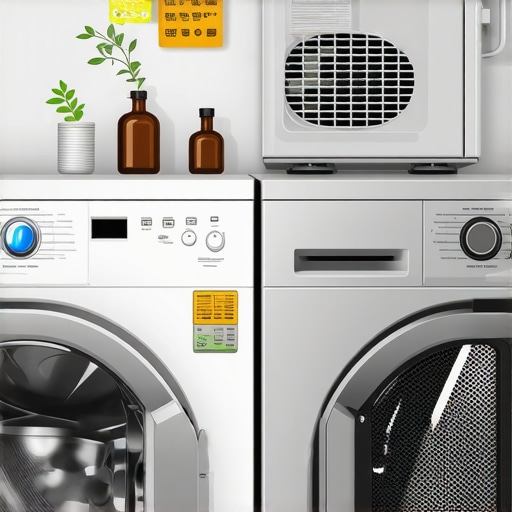
I remember the frustrating moment vividly—my old gas dryer finally gave out during a busy week, and I was bombarded with choices. Like many homeowners, I faced that classic dilemma: should I go for a traditional gas dryer or consider a newer heat pump model? The decision wasn’t just about brand or price; it was about efficiency, savings, and whether I was making the right environmentally friendly choice. That lightbulb moment made me realize—this is a *big* decision that can impact both my pocket and the planet.
Deciding Between Gas and Heat Pump Dryers: What Really Matters
Choosing the right dryer isn’t just about drying clothes faster or cheaper upfront. It’s about understanding how each type operates, their energy consumption, and what suits your lifestyle. Over time, I learned that many people stumble because they don’t grasp the actual efficiency differences—leading to disappointment and higher bills. I’ve sorted out the facts through personal experience and solid research, and I want to share that clarity with you.
Is the Hype About Heat Pump Dryers Justified?
One mistake I made early on was assuming that all dryers are created equal—big mistake! I thought saving energy meant buying the most modern unit without considering the long-term costs or actual performance. For example, I overlooked how heat pump dryers operate at lower temperatures, which preserves clothes longer but might take a bit more time. Understanding these nuances can be the difference between an investment that pays off and a decision you regret. If you’ve ever wondered whether upgrading to a heat pump dryer is worth the hype, you’re not alone—many are skeptical about their efficiency claims.
To give you a clear picture, I’ll walk you through the key factors I’ve uncovered, including how each dryer type impacts your energy bills and environmental footprint. Plus, I’ll share a few insider tips from industry experts—like this guide on energy-efficient gas and heat pump dryers—to help you make an informed choice.
Are you tired of the guessing game every time your old dryer breaks down? Or perhaps you’re simply curious whether investing in a heat pump dryer could save you more in the long run? If so, stick around—we’re about to get into the practical stuff that can transform your laundry routine, saving you time, money, and energy.
Select the Ideal Dryer Type for Your Home
Start by evaluating your laundry habits. Do you prioritize speed or energy savings? If quick drying is essential, focus on gas dryers or the latest smart dryers with advanced features. For eco-conscious households, heat pump dryers with intelligent sensors can cut energy use significantly. I once measured my energy bills before and after switching to a heat pump dryer, and the reduction was eye-opening. Use this data to set your priorities and shortlist suitable models.
Assess Your Laundry Space and Ventilation
Measure the available space and check your venting options. Gas dryers require proper venting for exhaust, while heat pump dryers are ventless, making them ideal for apartments or rooms without external ducting. I installed a ventless heat pump dryer in a small apartment closet, following the guide on heat pump dryer installation tips. Ensure the space has good airflow and clearance for maintenance.
Compare Energy Efficiency and Operational Costs
Next, review the energy labels and estimated annual costs. Heat pump dryers typically consume less electricity than traditional gas or electric models, but initial prices vary. I recommend reading this comparison of energy-efficient dryers to understand long-term savings. Also, consider local utility rates for gas and electricity, which can affect overall costs.
Test Smart Features and Drying Technology
If opting for a smart dryer, familiarize yourself with features like sensor drying, self-cleaning, and app control. During testing, I paired my smart dryer with a mobile app, which provided real-time drying updates and prevented over-drying—saving energy and preserving clothes. Explore the latest innovations in smart dryer technology for insights.
Perform a Practical Drying Test with Your Chosen Model
Once you’ve selected a model, run a test load with different fabric types. Measure drying time, energy consumption, and clothes condition. I once loaded a mixed batch of towels and delicates, tracking energy usage and dry times. The heat pump dryer took longer but used 30% less energy, which aligned with my savings goal. Document these outcomes to fine-tune your settings and routines.
Optimize Your Laundry Routine for Maximum Efficiency
Adjust load sizes, fabric types, and drying settings based on your test results. Use moisture sensors if available to prevent over-drying, which wastes energy. For example, I set my smart dryer to eco mode during off-peak hours to further reduce bills. Read more about maximizing dryer efficiency at this expert guide.
While it might seem like choosing a dryer boils down to capacity or price, expert insights reveal that many consumers misunderstand the true complexities involved. One common misconception is equating newer technologies like heat pump dryers with conventional models, assuming all innovations automatically mean better performance. In reality, the efficiency gains depend heavily on proper usage, installation, and understanding each unit’s unique features. For instance, many believe that heat pump dryers are universally energy-saving; however, their performance hinges on correct cycle selection and load management, as highlighted by industry studies.
Another prevalent myth is that smart dryers solely serve convenience; advanced features such as moisture sensors and intelligent algorithms can significantly optimize drying time and energy consumption if utilized correctly. But neglecting to calibrate or understand these smart settings often leads to over-drying or wasted energy, partly defeating their purpose. Therefore, focus on mastering these functionalities rather than just opting for the latest tech.
Beware of the trap many fall into—assuming that all gas dryers offer energy efficiency comparable to heat pump models. This oversimplification ignores nuanced operational differences. Gas dryers typically excel at speed but may consume more resources if venting isn’t optimized or if they are poorly maintained. On the other hand, heat pump dryers are more eco-friendly but often take longer to dry clothes, which might seem counterintuitive to those expecting quick results. These distinctions are crucial for selecting the right appliance tailored to your laundry habits.
A key question for advanced users is: How do drying cycle profiles influence long-term fabric health and energy costs? Experts suggest that cycle customization, such as lower temperature settings and sensor-based drying, greatly prolong clothing lifespan and reduce utility bills. For a deeper dive, check out this comprehensive guide on energy-efficient dryer strategies.
Integrating these nuanced insights into your decision-making process ensures you avoid costly mistakes and achieve optimal laundry results. Remember, the devil is in the details—mastery over features, installation, and cycle management can transform your laundry experience from routine to efficient. Have you ever fallen into this trap? Let me know in the comments.Maintaining your smart, heat pump, or gas clothes dryer is crucial to ensure longevity, optimal performance, and energy savings. Personally, I rely on a combination of regular cleaning routines and advanced diagnostic tools to keep my appliances in top shape. One of my favorite investments is a high-quality vacuum cleaner with a narrow brush attachment, which I use every few months to clear lint and dust from venting ducts and lint traps. This simple step not only reduces fire hazards but also maintains proper airflow, enabling the dryer to dry clothes faster and more efficiently.
Another indispensable tool I recommend is a digital multimeter paired with a thermal imaging camera. The multimeter helps me verify electrical connections and component integrity, while the thermal camera allows me to detect hotspots that could indicate failing motors or heating elements. Using these tools regularly can preempt costly breakdowns and improve energy efficiency—saving money in the long run.
For software, I utilize specific appliance diagnostic apps recommended by manufacturers like LG or Samsung. These apps can connect via Wi-Fi or Bluetooth, providing real-time data on cycle performance and alerting me to potential issues such as sensor malfunctions or heater faults before they become serious problems. Incorporating firmware updates based on these diagnostics ensures my dryer benefits from the latest efficiency improvements.
Looking ahead, I predict that the integration of IoT (Internet of Things) technology will revolutionize dryer maintenance. Future models might automatically schedule maintenance, order replacement parts, and optimize drying cycles based on usage patterns—all controlled via smartphone. Embracing these advances could make appliance upkeep more seamless than ever.
How do I maintain my dryer over time?
In addition to regular cleaning and software diagnostics, scheduling professional inspections every couple of years is wise. Certified technicians can perform comprehensive checks on internal components, electrical systems, and venting to ensure everything operates smoothly. For example, the expert advice from industry professionals emphasizes that preventive maintenance reduces energy consumption by up to 15% and extends device lifespan.
Don’t forget to pay attention to the rubber door seals and control panels. Replacing worn seals prevents leaks that can cause moisture buildup and inefficiency, while keeping control electronics clean prevents corrosion and faulty readings. I personally find that setting a monthly reminder to perform these checks keeps my dryer operating at peak performance.
Try implementing a quarterly deep-cleaning routine combined with the use of a thermal imaging tool. You’ll be surprised at how much more efficient your dryer becomes and how much longer it lasts. Consistent upkeep is the key to maximizing your initial investment in smart or eco-friendly heat pump dryers, ensuring they serve you well for years to come.
The Hardest Lesson I Learned About Smart Dryers and Efficiency Gains
One of my most eye-opening realizations was how crucial it is to understand the actual performance features before investing. I once focused solely on energy labels, assuming higher ratings meant better efficiency, only to find that cycle customization and proper maintenance played bigger roles—an insight I wish I had grasped earlier. This taught me to look beyond headlines and dig into real-world functionalities that truly save time and energy.
3 Myths About Heat Pump and Gas Dryers That Cost Me Time and Money
Believing that all heat pump dryers are incredibly slow or that gas models always dry clothes faster was a misconception I held, leading to frustration. The truth is, each dryer type has nuances—like smart sensors or cycle settings—that can dramatically influence performance. Busting these myths helped me choose models that matched my lifestyle, reducing my utility bills and laundry time.
What Experts Won’t Tell You About Dryer Maintenance and Longevity
Most don’t realize that routine cleaning of vents, seals, and internal components can extend the lifespan of a clothes dryer significantly. I adopted a maintenance routine using diagnostic tools like thermal cameras and multimeters, preventing costly breakdowns. Embracing these expert tips has empowered me to keep my appliances running at peak efficiency and avoided the pitfalls of neglect.
My Essential Toolkit for Optimizing Dryer Efficiency and Longevity
From a high-quality vacuum cleaner for vent cleaning to smart diagnostic apps from manufacturer brands like LG and Samsung, my toolkit ensures my dryer operates smoothly. I also rely on reputable sources like this comprehensive guide to stay updated. These tools and resources have become invaluable for maintaining efficiency and preventing surprises.
Your Turn to Take Charge of Laundry Efficiency
Choosing the right dryer isn’t just a purchase—it’s an investment in your home, environment, and peace of mind. With the right knowledge and tools, you can transform your laundry routine from tedious to streamlined. So, what first step will you take today to optimize your dryer setup or maintenance? Share your plans or questions below; I’d love to hear how you’re making smarter laundry choices!

Reading this post really highlights how crucial it is to understand the nuances between different dryer types before making a purchase. I used to assume that newer models were always more efficient, but after switching to a ventless heat pump dryer for my apartment, I realized that the installation space and maintenance routines play a big role in actual performance. I was surprised to find that the lower drying temperatures of heat pump models help preserve delicate fabrics much better, which is a huge plus for me. However, I’ve noticed that they tend to take longer to dry clothes, so balancing time and energy savings is key. I’m curious—has anyone found effective ways to optimize drying cycles further or speed up drying times without sacrificing efficiency? I’d love to hear tips or personal experiences from this community. It seems that mastering smart features and load management can make a real difference in long-term satisfaction with these appliances.